Car Flipping: The Complete 2026 Guide (Data-Backed)
Quick answer
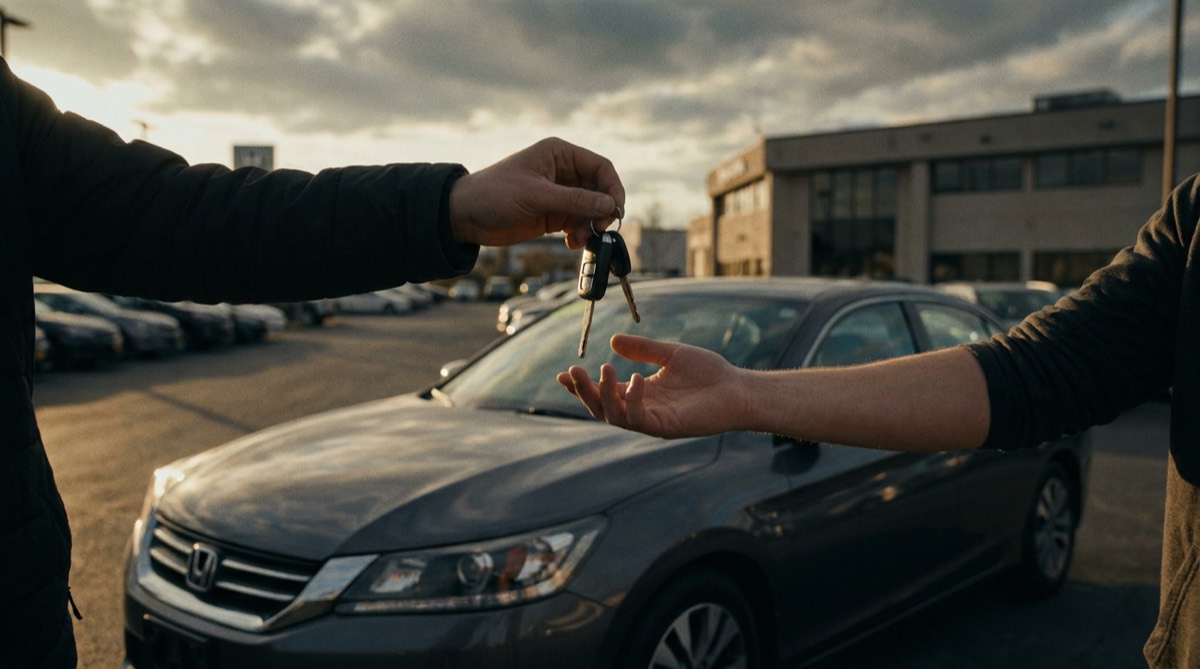
Car flipping is buying a car below its local market value, covering reconditioning, and reselling for a margin (typically $1,000–$3,000). The winners measure real local resale before buying; the losers guess it. Most states cap you at 3–5 sales/year without a dealer license.
Car flipping is simple to describe and hard to do well: buy a car below its local market value, cover any reconditioning, and resell it for a margin. The people who lose money do not lose on the buy price — they lose because they guessed the resale value, underestimated fees, or picked a car that sits for months. This guide is the data-backed version, built from 463,000+ active and sold listings across 50+ states.
How car flipping actually works
Every flip is the same equation:
Profit = Resale price − purchase price − fees − transport − reconditioning − taxes/title − holding cost
Two numbers decide everything: what you pay and what it actually resells for in your local market. Most beginners can control the buy price but guess the resale — and a wrong guess of even $1,500 turns a winner into a loss.
How much can you make?
Realistic per-car margins for independent flippers run $1,000-$3,000 on typical used cars, higher on niche or enthusiast vehicles. The number that actually matters is annualized return, which depends on velocity — how fast the car sells. A car that nets $2,000 in 20 days beats a car that nets $3,000 in 120 days, because your capital recycles far more times per year. We break this down in Cars That Look Profitable But Sit Too Long.
Where to source cars
- Salvage auctions (Copart, IAAI) — cheapest entry, no license needed for many lots, but mostly branded titles and repair risk.
- Dealer wholesale (Manheim, ADESA) — clean retail-ready cars, requires a dealer license.
- Impound / repo / police auctions — local cash bargains, high risk. See the guide.
- Private party (Facebook Marketplace, etc.) — the largest pool; underpriced listings appear daily if you know the local comp.
Full comparison: Best Car Auction Sites for Flippers.
See underpriced cars in your market right now.
Try 5 Free LookupsThe math that protects your margin
Before you buy anywhere, compute your max bid:
- Find true local resale — the median sold price for that exact year/make/model in your area.
- Subtract reconditioning — be honest; add a buffer.
- Subtract fees — auction buyer fees can be ~20% of the hammer price.
- Subtract transport, sales tax, and title fees.
- Subtract your target profit.
What's left is your ceiling. The Max Bid Calculator does this in one step. The single biggest mistake is anchoring step 1 to a national average instead of your local market — that's exactly the gap CarFlipIQ closes.
What makes a good flip car
Three measurable traits, all of which we track:
- Days-on-market under ~25 — it sells fast, so your capital recycles.
- Consistent demand across regional sub-markets — not a one-off spike.
- A real margin between acquisition cost and local median retail.
See the current data-driven picks in Best Cars to Flip in 2026 and Best Cars to Flip Under $10,000.
The legal side
Most states cap how many cars you can sell per year without a dealer license — commonly 3-5 in 12 months. Beyond that you need a license. Don't skip this; the fines erase real profit. Details: How to Flip Cars Without a Dealer License.
Avoiding the salvage trap
Salvage and rebuilt titles look cheap but resell at a steep, permanent discount (salvage ~30-50% under clean, rebuilt ~20-40%) and sit longer. They can be profitable if you have repair skill — price the brand in with the Salvage and Rebuilt Title value calculators, and read Why Salvage Flips Look Profitable But Fail.
The bottom line
Car flipping is a velocity-and-margin game won on information. Buy below local resale, keep reconditioning tight, account for every fee, and favor cars that sell fast. Get the local resale number right and the rest is execution.
Flip on data, not guesses.
CarFlipIQ tracks 463K+ listings across 50+ states so you know what any car sells for — and how fast — before you buy. Get 5 free lookups, no credit card.
Frequently Asked Questions
Is car flipping profitable?
Yes, when done on data: typical margins run $1,000-$3,000 per car, and annual return scales with how fast you turn inventory. The losers guess resale value; the winners measure it locally.
How do I start flipping cars?
Learn your local market values, start with private-party or salvage buys you can resell, compute max bid (resale minus fees, repairs, tax, profit) before every purchase, and stay under your state's license limit until you go pro.
How many cars can I flip without a license?
Usually 3-5 per 12 months, depending on the state. Past that you need a dealer license or you risk fines that erase your profit.
Ready to find underpriced cars?
Get 5 free lookups and see real market data for any vehicle, powered by 1.3M+ listings across 50 states.